Healthy Workplaces Need Strong Social Dialogue
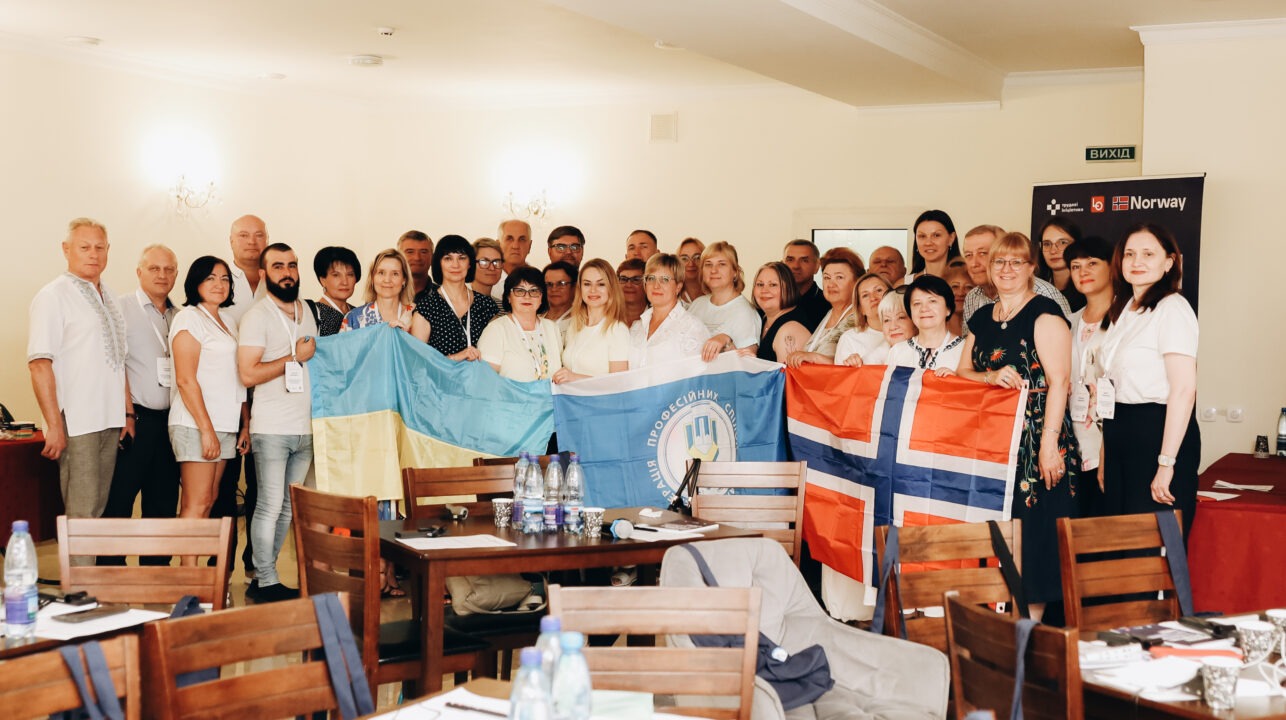
From June 29 to July 1, 33 shop stewards, union federation leaders, and rank-and-file unionists representing diverse sectors within the Federation of Trade Unions of Ukraine (FPU) gathered in Uzhgorod. They participated in an intensive training program titled “Building Healthy Workplaces in Ukraine: Social Dialogue, Tripartite Cooperation, and Norwegian Experience.”
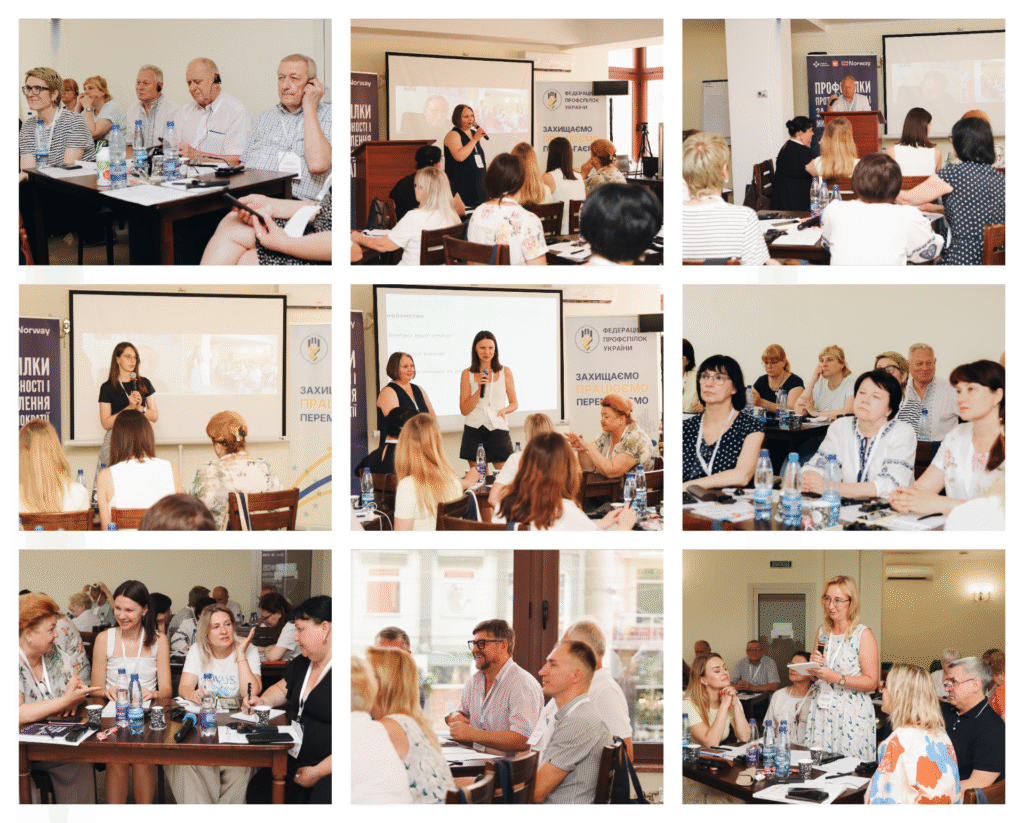
The ongoing full-scale invasion, constant bombardment, and daily air alerts have placed Ukrainian workers under unprecedented psychological strain. Coupled with the urgent necessity of reintegrating former military personnel into civilian and professional life, it is clear that trade unions must take an active, leading role. Because the workplace is where people spend the majority of their lives, establishing effective psychosocial support must be a priority for all social partners. Mitigating these psychological risks is a shared responsibility of employers, unions, and the state alike.
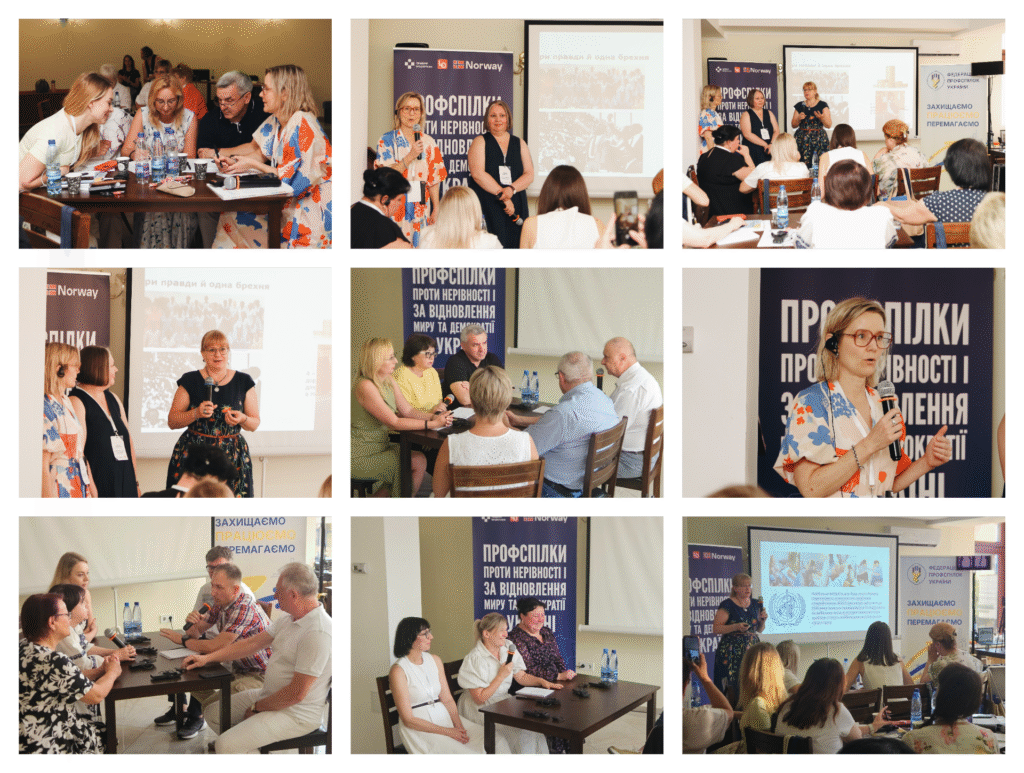
Over the three-day training, participants analyzed Ukrainian legislation and sectoral case studies and engaged with the Norwegian model of workplace safety and social dialogue. Nina Monsen, an advisor from the Norwegian Confederation of Trade Unions (LO), shared valuable insights into how active worker participation, strong union involvement, and the daily practice of social dialogue in Norway lead to joint, systemic solutions for healthy and safe workplaces.
Building on the training sessions, on July 1, Uzhgorod also hosted the second regional roundtable in a nationwide series initiated by FPU, titled “Mental Health as the Core Element of Decent Work.”
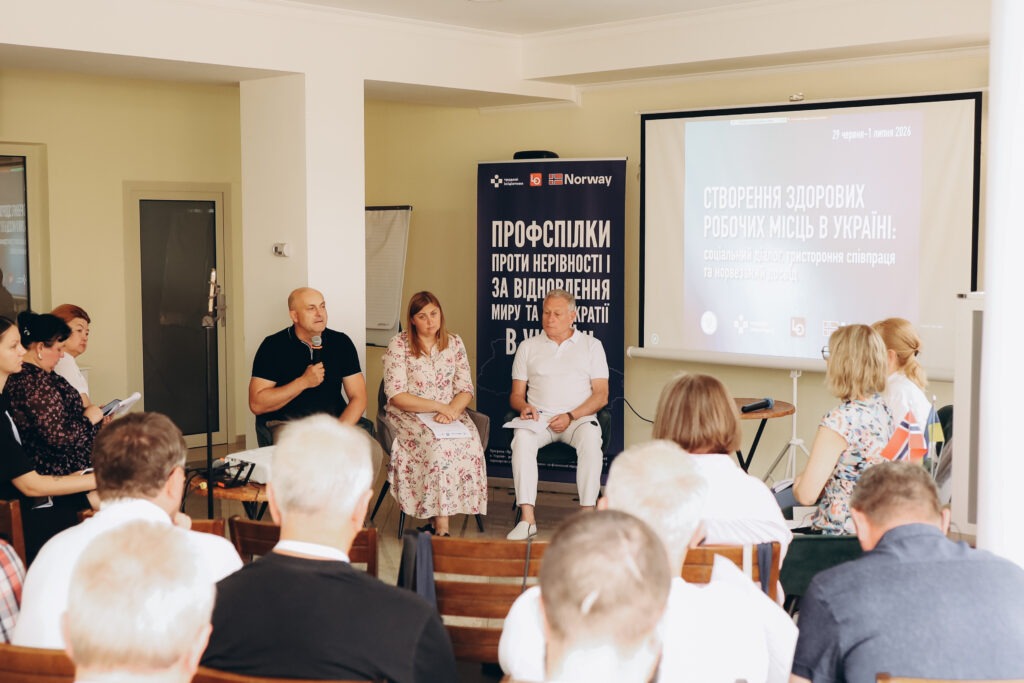
The roundtable brought together a distinguished group of stakeholders, including Ombuds Representative in the Zakarpattia region, representative of the State Employment Service (Labor Inspectorate) in the region, leadership of Zakarpattia FPU-affiliated unions and various sectoral union leaders.
Participants focused heavily on the practical steps needed to protect workers, emphasizing the importance of incorporating specific mental health provisions directly into collective bargaining agreements (CBAs) and developing local action plans to mitigate psychological risks.
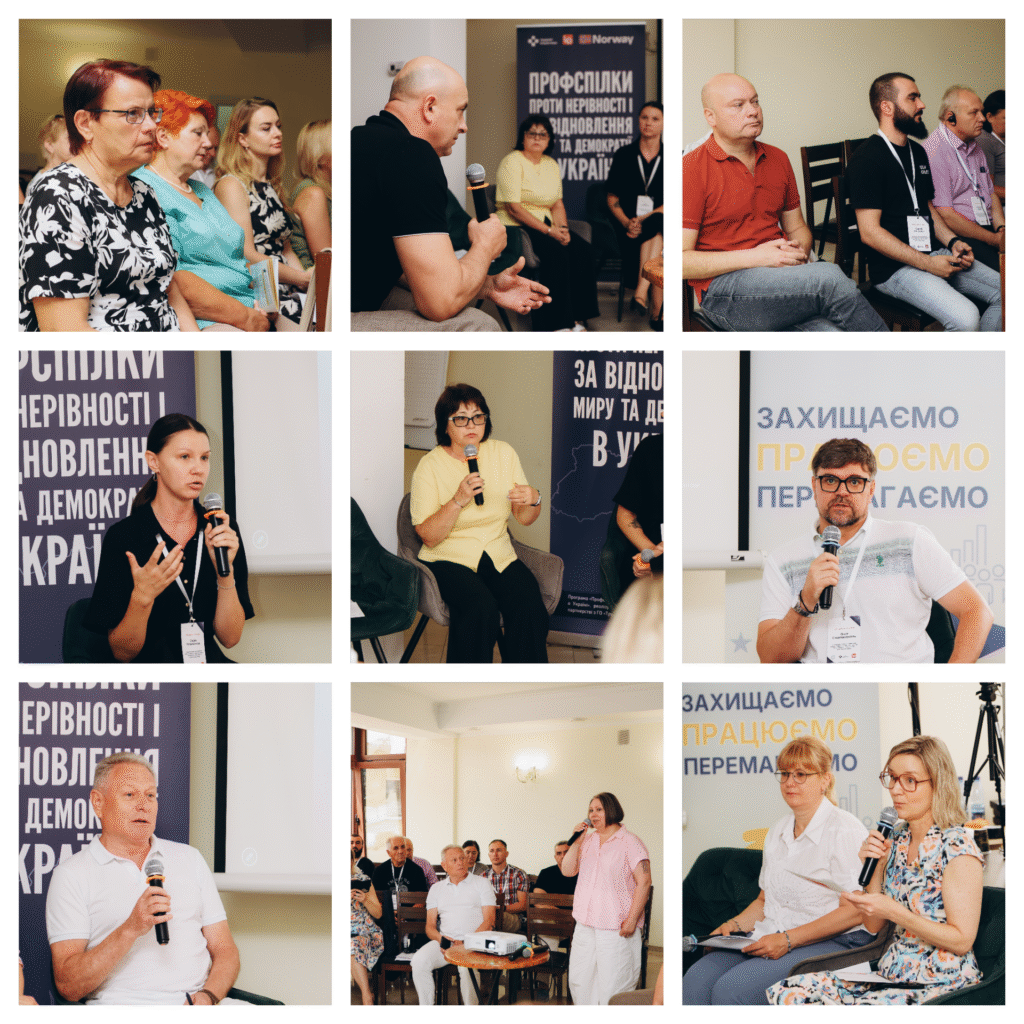
Crucially, the discussions centered on both supporting workers dealing with daily wartime stress and establishing robust systems for veteran reintegration, workplace adaptation, and professional rehabilitation. Roundtable participants concluded with a unified message: employers and trade unions bear a joint responsibility to foster a safe, supportive, and veteran-friendly working environment across Ukraine.
