Trade Union Lifeline Training in Slavutych Supports Chornobyl Union Activists
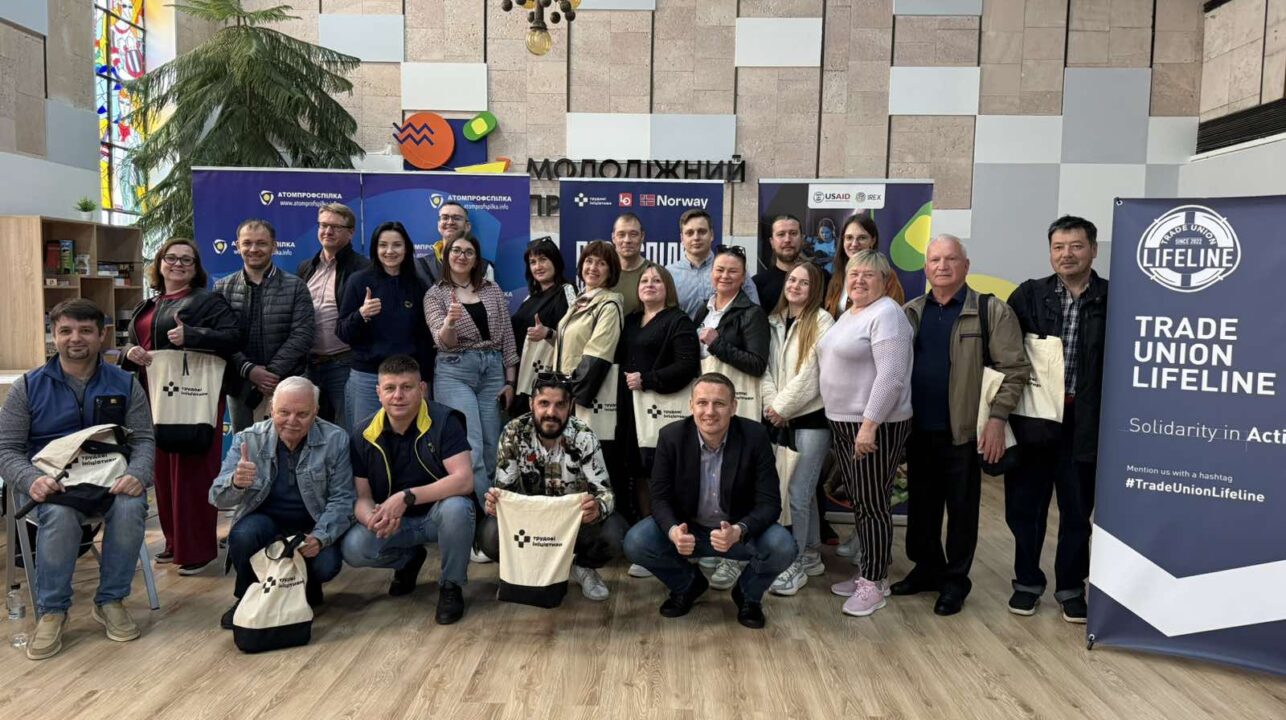
On May 15-16, 2026, Labor Initiatives (LI) and the Trade Union Lifeline (TUL) initiative held a two-day educational event in the de-occupied town of Slavutych, the satellite city of the Chornobyl Nuclear Power Plant (ChNPP). This event is part of an ongoing campaign launched at the start of the full-scale invasion to support war-affected regions, reaching local union members in frontline and vulnerable areas to strengthen grassroots organizing, apply international best practices, foster mutual workplace support, and build overall resilience.
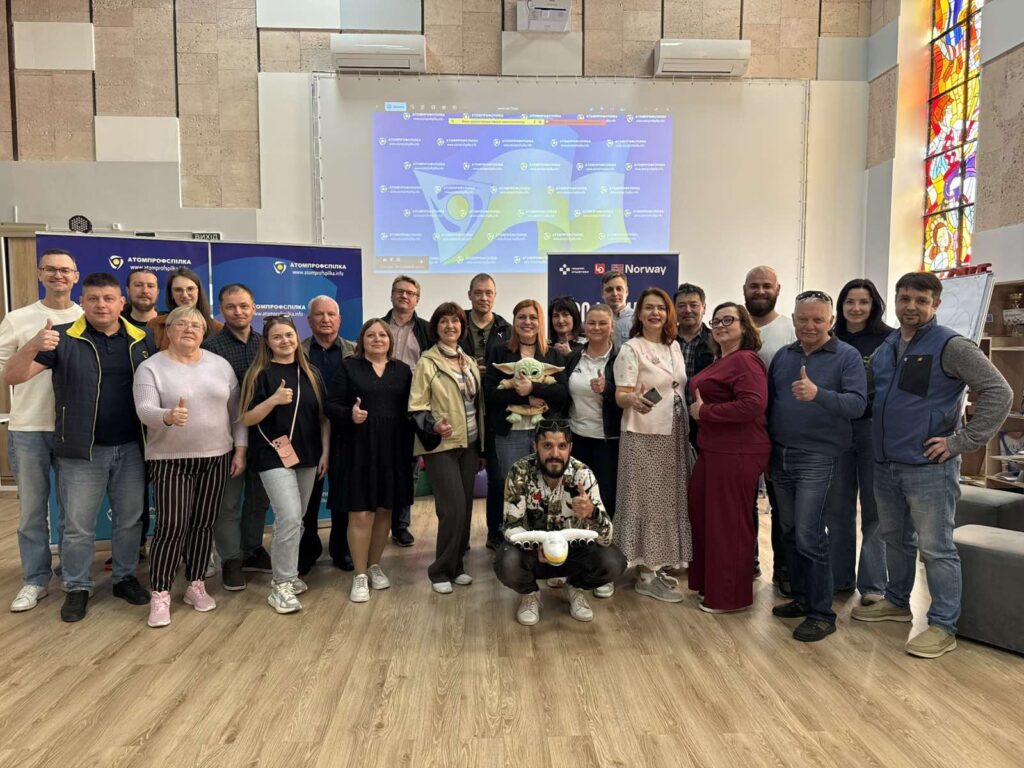
Located roughly 50 km from the ChNPP, Slavutych was purpose-built in 1986 following the nuclear disaster and was occupied by Russian troops for three days in March 2022. Given the city’s unique context, the event was tailored for approximately 30 union members and shop stewards of the ChNPP local union, which is affiliated with Atomprofspilka (the Nuclear Energy and Industry Workers’ Union of Ukraine).
Tristan Masat, Country Program Director for the Solidarity Center in Ukraine, and chair of the board of LI, opened the event on behalf of the LI and TUL teams. The Atomprospilka team was represented by young leaders Khrystyna Levchenko and Pavlo Oleshchuk, who also facilitated the training.

The legal training session, led by LI attorneys Inna Kudinska and George Sandul, focused on current legislation regarding collective bargaining and the new law set to take effect six months after martial law is lifted. They also analyzed the upcoming draft of the Labor Code and its potential risks to workers. A central part of the session was dedicated to discussing the connection between company-level and sectoral collective agreements, addressing specific wage disputes raised by ChNPP workers, and exploring practical legal remedies.
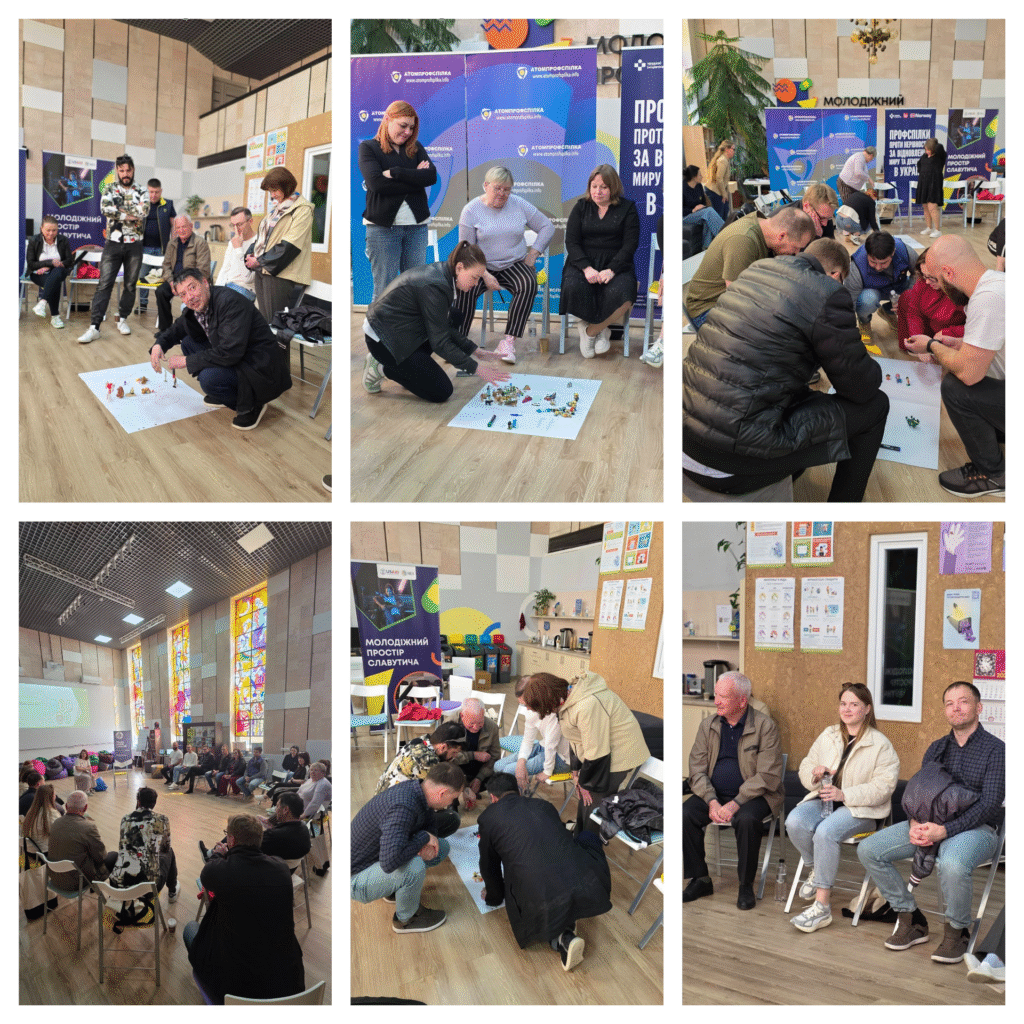
TUL founding members and union activists Ivanna Khrapko and Pavlo Babich led an interactive session focusing on TUL’s ongoing activities and overall union motivation. They dove into global union history, collective power, and member engagement, directly connecting these concepts to today’s realities for Ukrainian workers and the broader labor movement.
Additionally, a dedicated training on workplace conflict resolution and negotiation communication tactics was led by a PhD in psychology, critical tools for a workforce that has endured the trauma of enemy occupation, as well as the specifics of work at the critical infrastructure facilities.
